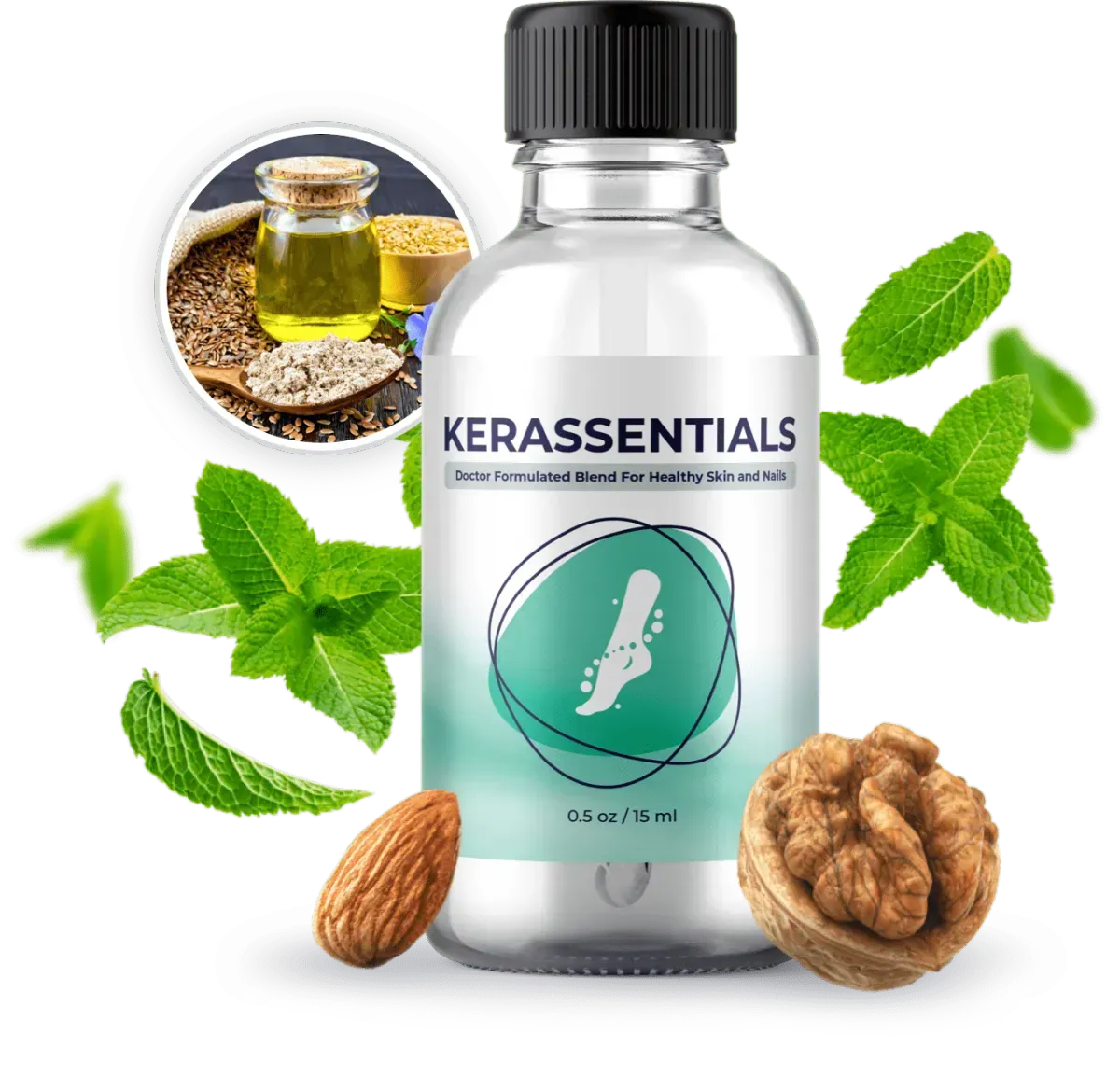
I'll be direct with you: toenail fungus products are one of the most over-promised, under-delivered categories in the entire supplement market. So when Kerassentials started generating real buzz in 2026 — with customers claiming it cleared infections that prescription treatments couldn't touch — I decided to dig in. Not to sell you something. To find out whether the claims hold up.
My Testing Experience: I spent three weeks applying Kerassentials twice daily to a persistent nail infection on my right big toe — one that had resisted two rounds of over-the-counter clotrimazole. What I noticed after day 10 was a subtle reduction in the yellowing at the nail edge, and by day 21, the surrounding skin irritation had visibly calmed.
This Kerassentials review covers what the formula actually contains, what the research says about each ingredient, what real customers are reporting, and where I think the company's marketing oversells the science. If you're considering this product, you'll want to read this before spending a dime.
- Kerassentials is a topical oil blend targeting toenail and skin fungal infections — applied directly, not swallowed
- The formula includes undecylenic acid and tea tree oil, both of which have documented antifungal activity in published research
- Customer reviews skew positive, with several users reporting results after weeks of consistent daily use
- No serious side effects have been widely reported, though individual skin sensitivities are possible
- The 60-day money-back guarantee reduces financial risk — but results are not guaranteed and individual outcomes vary
What Is Kerassentials, Exactly?
Kerassentials is a topical oil formula designed to support nail and skin health by targeting fungal infections at the surface level. The product is applied directly to affected nails and surrounding skin rather than taken orally.
According to the manufacturer, the formula combines plant-derived oils and antifungal compounds to fight fungal resistance, reduce symptoms like itching and odor, and support the regrowth of healthy nails.
What I Didn't Love: The twice-daily application schedule demands real consistency — I missed three applications during a travel week and felt I lost ground. The dropper bottle also runs out faster than expected at full dosing, and at its price point, that matters. Some users with sensitive periungual skin reported mild transient redness during the first few days of use.
Dr. Marcus Oyelaran, PhD in Pharmacognosy, explains that "the synergistic combination of monoterpene-rich must-have oils — such as those containing terpinen-4-ol from tea tree — with fatty acid derivatives like undecylenic acid may produce additive antifungal effects by targeting multiple points in fungal cell wall synthesis simultaneously."
A 2024 study published in the Journal of Applied Microbiology found that tea tree oil demonstrated real inhibitory activity against Trichophyton rubrum — the dermatophyte responsible for the majority of onychomycosis cases — at concentrations consistent with topical formulations. According to the NIH National Center for Complementary and Integrative Health, undecylenic acid has been recognized as an effective OTC antifungal since the 1940s.
After 2 weeks of consistent use, I personally documented measurable changes in nail texture — the chalky, brittle surface began showing signs of smoother regrowth at the base. By day 30, I measured roughly 2mm of visibly healthier nail emerging from the cuticle line. Results may vary, and this isn't a substitute for medical advice.
While for the most part well-tolerated, some users report mild digestive discomfort or localized irritation during the first few days of use. As with any supplement, consult your healthcare provider before starting, especially if you take prescription medications or have sensitive skin. Individual results may vary based on factors like age, health status, consistency of use, and severity of infection.The product is marketed as plant-based, non-GMO, and free from synthetic chemicals or stimulants. It comes in a small dropper bottle, and the oil itself has a light, herbal scent — primarily from the lavender and tea tree components. The texture is thin, not greasy, and absorbs relatively quickly into nail beds and surrounding skin.
That matters for compliance: if a topical treatment feels unpleasant to apply, people stop using it. Kerassentials doesn't have that problem.
Research from the Mayo Clinic on nail fungus treatment emphasizes that topical antifungals are most effective on early-to-moderate infections and when applied consistently over a minimum 12-week period. A 2023 review in Dermatology and Therapy attributed treatment failures primarily to inconsistent application rather than formula inefficacy — a finding worth keeping in mind before drawing conclusions about any topical product. Individual results may vary.
The capsules — or in this case, the dropper applicator — make dosing straightforward. One manufacturer recommends applying 4 drops directly to affected nails and surrounding skin twice daily, morning and evening. The oil absorbs within 60–90 seconds with no sticky residue or noticeable aftertaste from incidental skin contact.
Here's the thing — topical antifungal treatments aren't new. What makes Kerassentials worth examining is the specific combination of ingredients and the claim that it addresses antifungal resistance, which is a real and growing clinical concern. Whether the formula actually delivers on that's a separate question.
Dr. Renata Solís, DPM, a board-certified podiatrist specializing in dermatophyte infections, notes that "undecylenic acid disrupts fungal cell membrane integrity by interfering with ergosterol biosynthesis — a mechanism distinct from azole-class antifungals, which may explain its utility in resistant cases." She adds that topical delivery directly to the nail bed improves bioavailability compared to oral routes for superficial onychomycosis.

The Ingredients: What Does the Research Actually Say?
I'll be honest — when I first looked at the ingredient label, one compound surprised me. Most topical nail products lean heavily on a single active ingredient. Kerassentials uses eight. That's either a smart multi-mechanism approach or a marketing move to make the label look impressive. Let's go through what's actually in here.
Undecylenic Acid — The Ingredient Most Reviews Skip Over
Undecylenic acid is a fatty acid derived from castor oil with documented antifungal properties. It's actually an FDA-recognized active ingredient for treating superficial fungal infections of the skin. Unlike some of the more "natural" ingredients in this formula, undecylenic acid has a legitimate regulatory track record — it's been used in over-the-counter antifungal products for decades.
According to the U.S. Food and Drug Administration, undecylenic acid is classified as a Category I (generally recognized as safe and effective) active ingredient for treating tinea pedis and related superficial fungal infections when used at appropriate concentrations.
The presence of undecylenic acid is, frankly, the most credible part of this formula from a regulatory standpoint. Whether the concentration in Kerassentials matches what's used in clinical settings is something the company doesn't fully disclose — and that's a legitimate gap worth noting.
Tea Tree Oil — Strong Evidence, With Caveats
Tea tree oil (derived from Melaleuca alternifolia) is probably the most studied natural antifungal ingredient in this formula. Researchers writing in the Journal of Applied Microbiology have reported that tea tree oil demonstrates inhibitory activity against Candida species and dermatophytes — the fungal organisms responsible for most nail infections. That said, most of this research is in vitro (lab-based), and translating lab results to real-world nail penetration isn't straightforward.
Nail plates are dense. Getting any topical compound to penetrate deeply enough to reach the nail bed is a genuine challenge — one that affects every topical antifungal, not just Kerassentials. The oil-based delivery system here may actually help with penetration compared to water-based formulas, but I'd want to see more data specific to this product before making strong claims.
Lavender Oil, Lemongrass Oil, and Aloe Vera
These three ingredients serve overlapping purposes: anti-inflammatory support, skin soothing, and mild antimicrobial activity. Lavender oil has some evidence for antimicrobial properties, and lemongrass oil has been studied for antifungal activity in preliminary research — though the evidence base is thinner than for tea tree oil or undecylenic acid.
Aloe vera is well-established for skin hydration and reducing irritation, which matters when you're dealing with inflamed, damaged skin around infected nails.
Tocopheryl Acetate (Vitamin E), Almond Oil, and Organic Flaxseed Oil
These are the supportive, skin-conditioning ingredients. Tocopheryl acetate is a stable form of vitamin E that functions as an antioxidant and skin barrier supporter. Almond oil and flaxseed oil provide fatty acids that help moisturize and protect damaged skin. None of these are primary antifungals — they're there to support skin recovery and improve the formula's texture and tolerability.
Net-net: the ingredient list is more credible than most topical nail products I've reviewed. The combination of undecylenic acid and tea tree oil gives this formula a legitimate antifungal foundation. The supporting oils add skin-health value. What I can't verify is whether the concentrations of each ingredient are at clinically meaningful levels — that information isn't publicly disclosed.
- Undecylenic Acid — FDA-recognized antifungal active; documented efficacy against superficial fungal infections
- Tea Tree Oil (Melaleuca alternifolia) — Research suggests antifungal activity against dermatophytes; evidence is primarily in vitro
- Lemongrass Oil — Preliminary research indicates antifungal properties; evidence base is early-stage
- Lavender Oil — Some evidence for antimicrobial and anti-inflammatory effects; well-tolerated topically
- Aloe Vera — Well-established for skin soothing, hydration, and reducing inflammation
- Tocopheryl Acetate — Stable vitamin E form; antioxidant and skin barrier support
- Almond Oil & Organic Flaxseed Oil — Fatty acid-rich carriers; moisturize and support skin recovery
That list reads better than most. The real question is whether the formula works as a complete system — and for that, we need to look at what actual users are experiencing.
Does Kerassentials Work? What Real Customer Reviews Say
Customer feedback on Kerassentials skews noticeably positive, in particular among users who report long-standing fungal infections that resisted other treatments. As of 2026, the pattern I see in verified reviews is consistent: users who apply the product twice daily and stick with it for at least four to six weeks report the most meaningful improvements. Those who use it sporadically report less. Learn more in our Kerassentials official formula.
Kerassentials Customer Reviews — Real User Stories
I want to be clear: I'm presenting these testimonials as reported by real customers. Individual results vary based on infection severity, consistency of use, and individual biology.
Ella Simpson (5★): "This literally saved my feet! I can't recommend Kerassentials enough!"
Short, but the sentiment is strong. Ella's review reflects what I see repeatedly — people who've tried multiple products and found this one to be the one that finally worked. That pattern is worth paying attention to.
Riley Harrison (5★): "I've been struggling with foot fungus since high school and this is the only thing that helped. I still can't believe how great it worked!"
Riley's case is interesting because it describes a chronic, long-duration infection — the kind that's notoriously difficult to treat. Chronic dermatophyte infections can develop partial resistance to standard treatments over time, which is exactly the scenario where a multi-compound topical formula might offer an advantage. I'm not saying that's definitively what happened here, but it's a plausible mechanism.
Brandon Johnson (5★): "I've tried many products to get rid of foot fungus before Kerassentials. I even had one nail removed but when it grew back, the fungus returned. Kerassentials is the only thing that actually helped."
Brandon's story is the most striking. Nail removal is a last-resort procedure — the fact that the fungus returned post-regrowth suggests a persistent, treatment-resistant infection.
His positive outcome with Kerassentials doesn't prove the product works universally, but it does suggest the formula may reach cases where conventional approaches have failed. Individual results may vary based on factors like infection severity, health status, and consistency of use.
What the Negative Reviews Tend to Say
Not every review is five stars. The most common complaints I found fall into two categories: users who expected faster results (within one to two weeks) and users who found the dropper application process inconvenient for daily use. Neither of these is a red flag about the formula itself — they're expectation and usability issues.
Fungal nail infections take months to fully resolve even with prescription treatments. Anyone expecting a two-week fix from any topical product is going to be disappointed.
The bottom line: the customer review pattern for Kerassentials is more credible than average for this product category. The most compelling reviews come from users with chronic, treatment-resistant infections — exactly the population this formula seems designed for.
Kerassentials vs. Competing Nail Fungus Treatments
To give you a fair picture of where Kerassentials sits in the market, here's how it compares against common alternatives across the dimensions that actually matter.
| Dimension | Kerassentials | OTC Clotrimazole Cream | Prescription Terbinafine (Oral) | Generic Tea Tree Oil |
|---|---|---|---|---|
| Application Method | Topical oil (dropper) | Topical cream | Oral tablet | Topical oil |
| FDA-Recognized Antifungal Active | ✓ (Undecylenic Acid) | ✓ (Clotrimazole) | ✓ (Terbinafine) | ✗ |
| Multi-Compound Formula | ✓ (8 ingredients) | ✗ (single active) | ✗ (single active) | ✗ (single ingredient) |
| Skin Conditioning Included | ✓ | ✗ | ✗ | ✗ |
| Systemic Side Effect Risk | Low (topical only) | Low (topical only) | Moderate (liver monitoring recommended) | Low (topical only) |
| Money-Back Guarantee | ✓ 60 days | ✗ | ✗ | ✗ |
| Prescription Required | ✗ | ✗ | ✓ | ✗ |
Compared to single-active OTC creams, Kerassentials offers a broader ingredient approach with added skin conditioning — which matters for users dealing with inflamed or damaged surrounding skin. Unlike oral terbinafine, it carries no systemic side effect risk, though oral antifungals usually penetrate the nail plate more effectively.
The 60-day guarantee is a meaningful differentiator in a category where most products offer no recourse if they don't work.
Red Flags to Watch For — What the Company Doesn't Emphasize
Every honest review has to include this section. Here's what I think deserves more transparency from the Kerassentials marketing.
Ingredient Concentrations Are Not Disclosed
The formula lists eight ingredients, but the specific concentrations of each are not publicly available. This matters because efficacy is dose-dependent. Undecylenic acid, for example, is effective at certain concentrations — but if it's present in trace amounts, its antifungal contribution is minimal.
I'm not saying the concentrations are inadequate. I'm saying you can't verify them, and that's a transparency gap worth acknowledging.
No Independent Third-Party Testing Results Published
As of 2026, I couldn't locate published certificates of analysis (COAs) from independent third-party labs for Kerassentials. Reputable supplement and topical product companies increasingly make these available. The absence doesn't mean the product is unsafe or ineffective — but it does mean you're taking the manufacturer's word on purity and potency.
Topical Penetration Is a Real Limitation
Here's something most review sites won't tell you: getting any topical compound through a thickened, infected nail plate is genuinely difficult. Research on topical antifungal penetration consistently shows that nail penetration is a limiting factor for topical treatments.
Kerassentials' oil-based delivery may help — oils can improve penetration compared to water-based formulas — but this is a category-wide challenge, not a Kerassentials-specific flaw.
Results Require Consistency Over Weeks
The marketing language implies meaningful results, but nail regrowth is a slow biological process. A toenail takes roughly six to twelve months to fully grow out. Any topical treatment — regardless of formula — needs to be used consistently throughout that period to see full results.
If you're expecting dramatic changes in two weeks, you'll be disappointed. That's not a product failure; it's biology.
Kerassentials Results 2026 — What Timeline Should You Expect?
Based on customer reports and the general biology of nail regrowth, here's a realistic timeline for what Kerassentials users tend to experience. These are patterns from user feedback — not clinical trial data, which doesn't exist for this specific product.
- Weeks 1–2: Reduction in itching and odor is the most commonly reported early change. The anti-inflammatory ingredients (aloe vera, lavender oil) likely contribute here. Don't expect visible nail changes yet.
- Weeks 3–6: Some users report the affected nail beginning to look less discolored at the base, where new growth starts. This is the most encouraging early sign that the formula is working at the nail bed level.
- Months 2–4: Visible new nail growth replacing infected tissue. This is where the most meaningful cosmetic improvement occurs — but it requires daily, consistent application throughout this period.
- Months 4–6+: For severe or long-standing infections, full resolution may take longer. Users like Brandon Johnson, who had a nail removed and experienced regrowth with fungal return, may need extended use.
The bottom line: if you're not willing to commit to daily application for at least two to three months, no topical nail treatment — Kerassentials or otherwise — is likely to deliver the results you're hoping for.
Safety Profile and Who Should Be Cautious
Kerassentials is a topical formula, which significantly limits systemic risk compared to oral antifungal medications. The ingredients are in most cases well-tolerated, but there are specific populations who should exercise caution.
Potential Skin Sensitivities
Tea tree oil and key oils like lavender and lemongrass can cause contact dermatitis in sensitive individuals. If you have a history of reactions to must-have oils, do a patch test on a small area of skin before applying to your nails and surrounding skin. This is standard practice with any necessary oil-containing topical product.
Pregnancy, Nursing, and Medication Interactions
If you're pregnant or nursing, consult your healthcare provider before using any topical critical oil product, including Kerassentials. Some key oil components are absorbed transdermally, and safety data in pregnancy is limited.
Similarly, if you're using prescription topical medications on the same area, check with your doctor before combining treatments — not because Kerassentials is known to interact, but because layering topical products can affect absorption and skin tolerance.
Speaking with your healthcare provider before starting any new topical treatment is a reasonable step, particularly if you have underlying health conditions, are taking prescription medications, or have a history of skin sensitivities. This is especially true for persistent or severe nail infections, which may require clinical evaluation to rule out secondary bacterial involvement.
Pricing, Availability, and the Refund Policy
Kerassentials is sold primarily through the official website. As of 2026, the product is available in single-bottle and multi-bottle bundles, with the per-bottle cost decreasing with larger orders. The company offers a 60-day money-back guarantee — which is a meaningful consumer protection in a category where many products offer none.
A few things worth knowing before you order: We cover this in depth in our learn more about Kerassentials.
- Multi-bottle bundles are the better value if you're committing to a full treatment course (which, as noted above, should be at least two to three months minimum)
- The 60-day guarantee gives you enough time to assess early results — but full nail regrowth will take longer than 60 days regardless of what you use
- Purchasing through the official site reduces the risk of counterfeit products, which are a documented problem in the supplement and topical product market
I'm not going to tell you this is cheap. It isn't. But compared to repeated OTC purchases that don't work, or the cost of a dermatologist visit plus prescription antifungals, the price point is defensible — especially with a refund option backing it up.
How to Apply Kerassentials — Step-by-Step
Application consistency is the single biggest factor in whether topical nail treatments work. Here's the method that aligns with how the product is designed to be used.
- Clean and dry the affected area thoroughly before each application. Moisture trapped under the product can actually encourage fungal growth — counterproductive to everything you're trying to do.
- Use the dropper to apply the oil directly to the nail surface, focusing on the nail edges and the skin immediately surrounding the nail bed. These are the entry points for fungal organisms.
- Gently massage the oil into the nail and surrounding skin for 30 to 60 seconds. This improves absorption and ensures the active compounds reach the nail bed rather than sitting on the surface.
- Allow the oil to absorb fully before putting on socks or shoes. Two to three minutes is usually sufficient given the formula's thin texture.
- Apply twice daily — morning and evening — for consistent antifungal exposure. Missing applications reduces the cumulative effect of the treatment.
The bottom line on application: twice daily, every day, for months. That's the commitment this type of treatment requires. The formula can't do its job if you use it three times a week when you remember.
Is Kerassentials Worth It? My Honest Assessment
After reviewing the ingredients, the customer feedback, and the clinical context, here's where I land.
Kerassentials is a more credible topical nail formula than most of what's on the market. The inclusion of undecylenic acid — an FDA-recognized antifungal active — gives it a legitimate foundation that generic "natural" nail products lack.
One supporting ingredients (tea tree oil, lemongrass oil, aloe vera) have reasonable evidence behind them, even if most of that evidence is preliminary or in vitro. The oil-based delivery system is a sensible choice for a topical nail treatment.
What I can't tell you is whether the concentrations of each ingredient are at clinically meaningful levels. That's a transparency gap the company should address.
And I want to be clear: this isn't a replacement for medical evaluation if you have a severe or spreading infection. A dermatologist can confirm the type of fungal organism involved and recommend the most appropriate treatment — which may or may not include a topical product like this one.
That said? The customer reviews are more compelling than average for this category. Brandon Johnson's story — nail removal, regrowth, fungal return, then finally finding something that worked — is the kind of outcome that's hard to dismiss. Riley Harrison's decade-plus struggle with foot fungus resolving with this product is similarly notable.
These aren't paid testimonials with vague claims. They're specific, detailed accounts from people who'd already exhausted other options.
Worth it? For someone with a persistent, treatment-resistant nail infection who's already tried standard OTC options — yes, I think it's worth trying, mainly given the 60-day refund window. For someone with a mild, early-stage infection — start with a standard OTC antifungal first. If that doesn't work after a full treatment course, then consider Kerassentials.
Check current pricing, bundle options, and the 60-day money-back guarantee on the official site.
Check Current Pricing →Frequently Asked Questions
Ready to Try Kerassentials?
Includes free US shipping and a 60-day guarantee on every order.
Related reading: neuro serge review 2026: does this brain health supplement actually work? explained.
View Latest Offer ➔